5 Axis CNC Breakout Board Interface Mach3 CNC Router Kit USB Power Opto-Isolated 5-Input Relay Output 0-10V Analog Spindle Speed Control for CNC Router Engraving Machine


5 Axis CNC Breakout Board Interface Mach3 CNC Router Kit USB Power Opto-Isolated 5-Input Relay Output 0-10V Analog Spindle Speed Control for CNC Router Engraving Machine
5 Axis CNC Breakout Board Interface for Mach3 and Linux CNC Router Kits
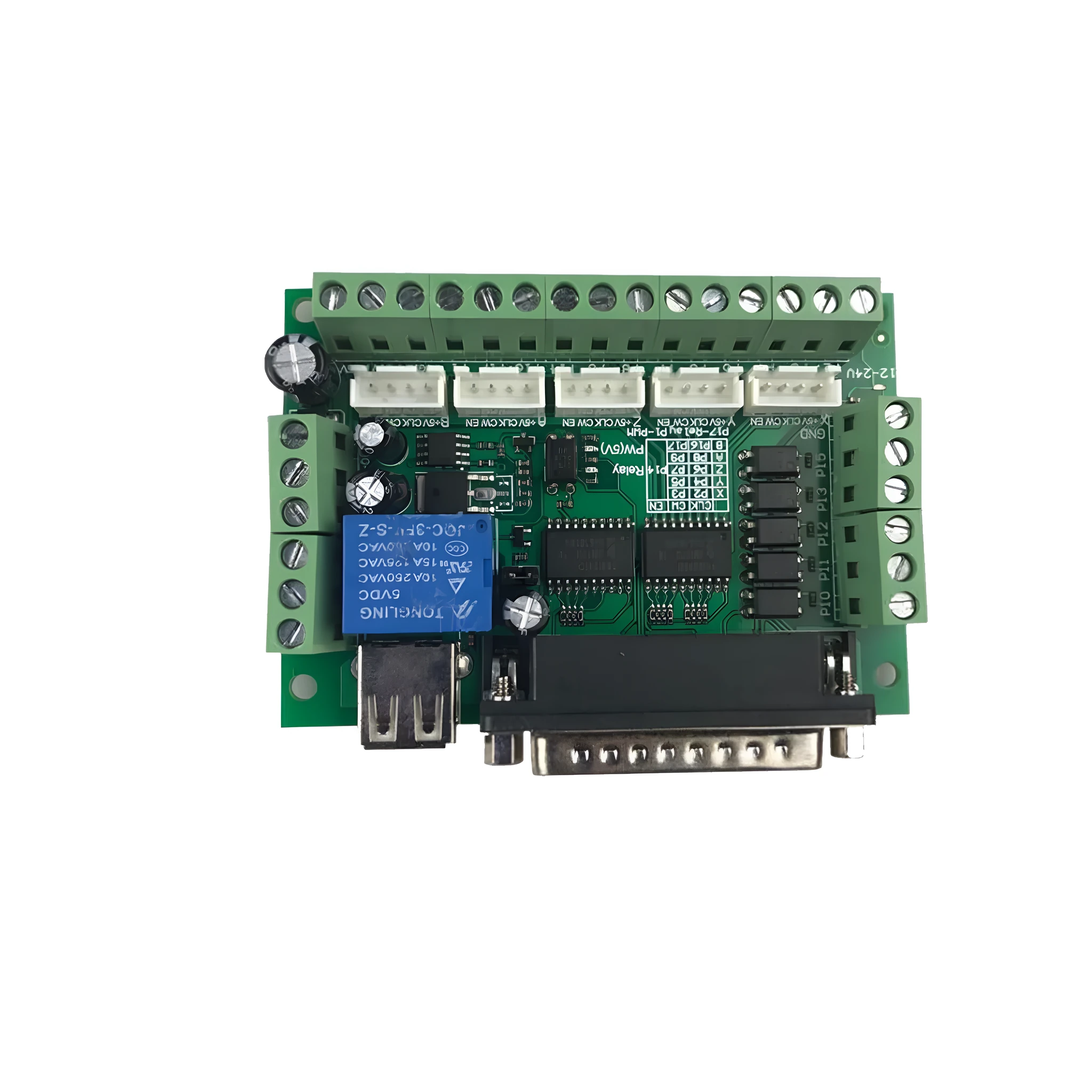
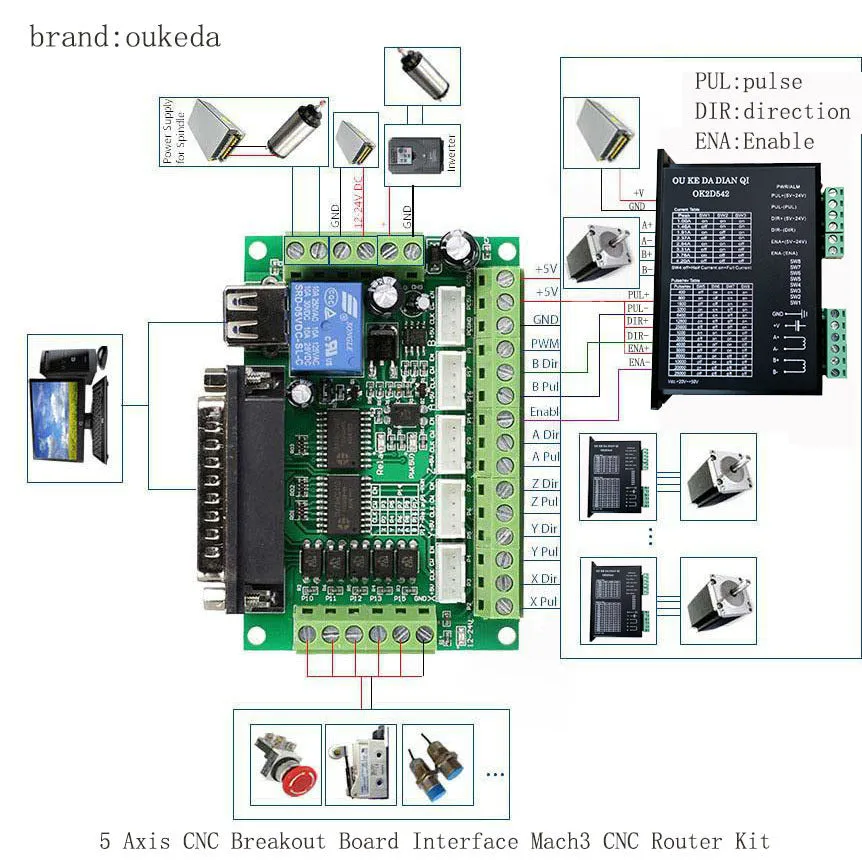
This 5 axis CNC breakout board interface is a practical connection point between a computer and a CNC router or engraving machine. It supports up to five stepper motor driver controllers, making it suitable for multi-axis CNC builds. The board is compatible with MACH3 and Linux CNC (EMC2) parallel-control software, so it fits into common workshop control setups. All signals are opto-isolated, and the USB power supply is separated from the peripherals power phase to help protect the computer. It also includes five input interfaces for limit switches, emergency stop, cutter alignment and similar signals. A relay output can switch a spindle motor, air pump or water pump, while the 0-10V analog output allows inverter-based spindle speed control. The wide 12-24V input range includes anti-reverse protection, and the board works with all two-phase microstep drivers in the market.
Features and Construction
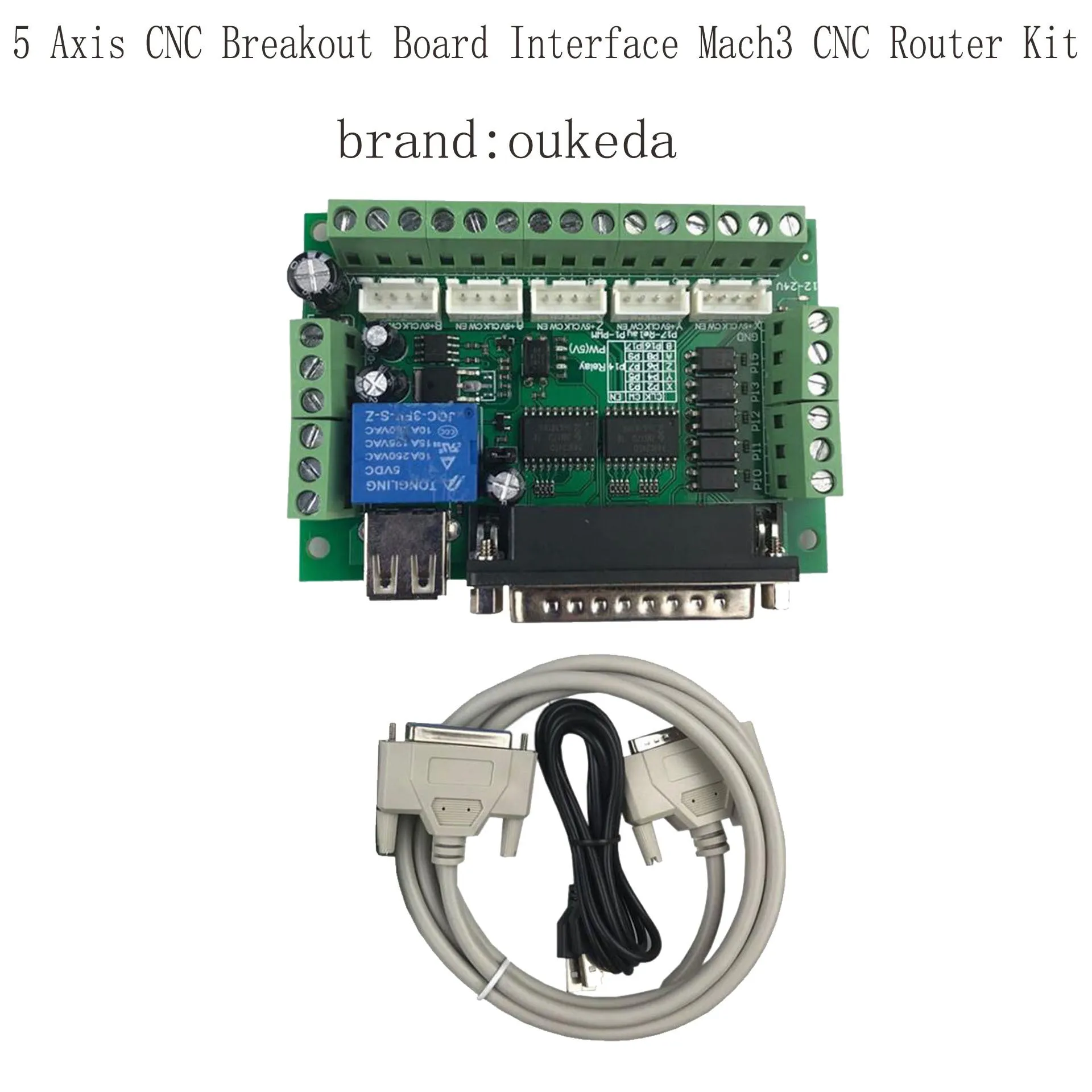
The board is built around signal isolation and flexible interfacing rather than a stated enclosure material. It provides separate power phases for USB and peripherals, and the opto-isolated signal paths are intended to protect the computer during CNC operation. The source text lists no physical dimensions, so the description remains focused on electrical connections and control functions.
Opto-Isolated Signal Paths
All signals on this breakout board are opto-isolated. This matters because CNC electronics can carry electrical noise and voltage spikes between the computer and the machine. By isolating the signal lines, the board helps separate the computer from the higher-risk machine side. The USB power supply and the peripherals power phase are also separated. Together, these measures are intended to protect computer security in a practical electrical sense, not as a software feature.
Input and Output Interfaces
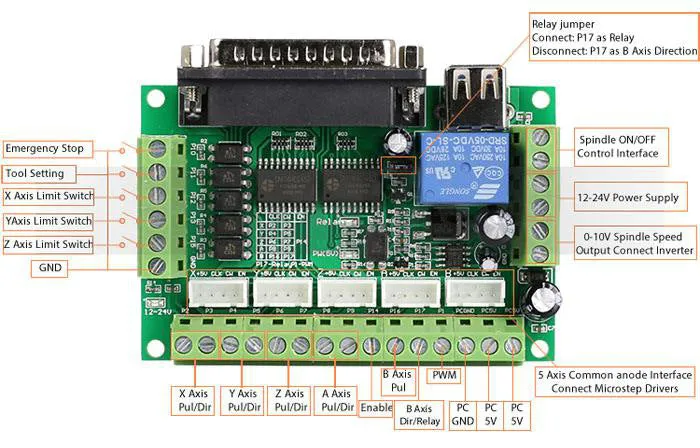
The board includes a 5-input interface for functions such as Limit, Emergence-Stop, and Cutter alignment. One relay output control interface is available for a spindle motor, air pump, water pump, or similar device. There is also a 0-10V analog voltage output for an inverter to control spindle speed. These connections let the board handle common CNC control tasks without needing separate interface modules for each function.
Voltage and Driver Compatibility
The input voltage range is 12-24V, and the board includes an anti-reverse function. It is compatible with all two-phase microstep drivers in the market. This broad driver compatibility means it can be used with many existing stepper driver setups. The board also supports up to five axes, which is useful for CNC routers and engraving machines that need more than three axes of motion.
Uses and Placement
This interface is intended for CNC control cabinets and router builds where a computer needs to communicate with stepper drivers and machine accessories. It suits MACH3 and Linux CNC (EMC2) parallel-control software environments, and the relay output can manage auxiliary devices such as pumps or a spindle motor.
CNC Router and Engraving Machines
For CNC routers and engraving machines, the board provides up to five axis channels. That makes it relevant for machines with additional axes beyond the basic X, Y and Z setup. The five input interface can be used for limit switches and emergency stop wiring, which are common requirements on routing and engraving equipment. Cutter alignment signals can also be connected through this input block.
Spindle and Pump Control
The relay output gives a simple on/off control path for a spindle motor or for an air pump or water pump. The 0-10V analog output is intended for an inverter, allowing spindle speed to be adjusted through the inverter. This combination covers both basic switching and variable speed control in one board. It is a practical option when a CNC setup needs to manage cooling or cutting functions alongside motion control.
Software and Driver Integration
The board is compatible with MACH3 and Linux CNC (EMC2), two parallel-control CNC software options. It is also compatible with all two-phase microstep drivers in the market. This means it can be added to many existing driver and software combinations without changing the whole control system. The opto-isolated design and separated power phases are included to reduce the risk of electrical problems reaching the computer.
Benefits and Buying Value
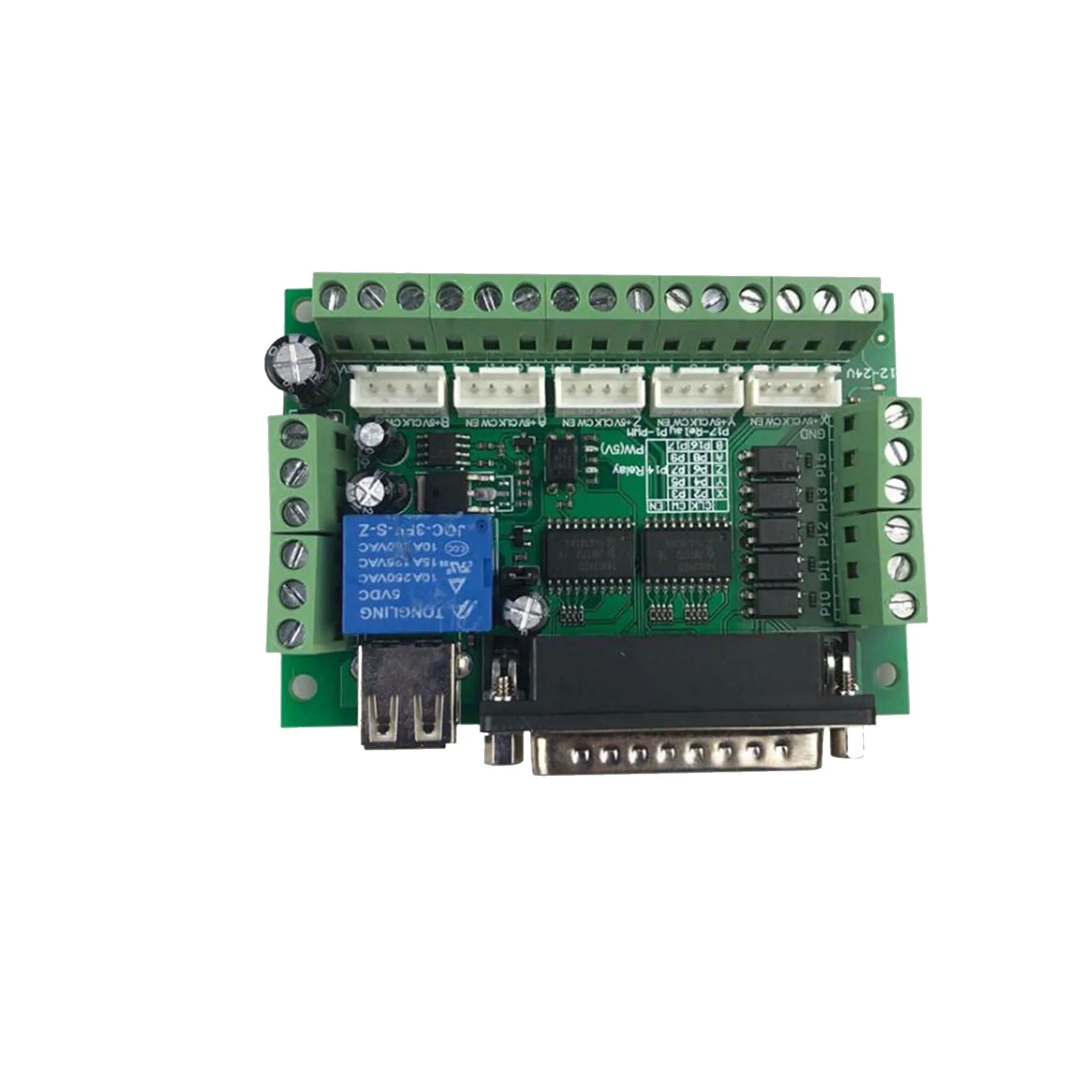
The main value of this board comes from combining multiple CNC interface functions in one unit: five axis support, five inputs, one relay output, and a 0-10V analog output. It also includes protection features such as opto-isolation, separated power phases, and anti-reverse input protection.
Reduced Wiring Complexity
By grouping axis control, input signals, relay switching, and analog spindle speed output on one board, the unit can reduce the number of separate interface parts needed in a CNC control box. The clearly defined input and output blocks make it easier to plan wiring for limit switches, emergency stop, cutter alignment, pumps, and spindle control. This is helpful when building or upgrading a router or engraving machine.
Computer Protection Features
The opto-isolated signals and separated USB and peripherals power phases are included to protect the computer. Anti-reverse protection on the 12-24V input adds another layer of safety for the board itself. These features are supported by the source text and are relevant for anyone who wants to avoid electrical damage during CNC operation. They do not replace correct wiring practice, but they are practical safeguards built into the design.
Broad Compatibility
The board works with MACH3 and Linux CNC (EMC2) parallel-control software and with all two-phase microstep drivers in the market. That broad compatibility makes it easier to match with common CNC electronics. It supports up to five axes, so it can serve simple three-axis routers as well as machines with additional axes. The 12-24V input range and anti-reverse function further add to its flexibility in different control setups.